
Signing up at an online casino like Slimking Casino involves more than just selecting a username and password https://slimkingg.eu/login/. A mandatory step in the sign-up process is the identity verification system, often referred to Know Your Customer or KYC. This procedure is not intended to inconvenience players; rather, it is a fundamental safeguard mandated by licensing authorities and international financial regulations. The checks confirm that a new user is of legal gambling age, is actually who they assert to be, and is not employing the platform for illicit purposes. Knowing how these checks work eliminates uncertainty and allows players to tackle the registration and login experience with confidence, knowing their security is being treated seriously from the very first interaction.
What makes Online Casinos Demand Identity Verification
The primary driver for mandatory identity checks is regulatory compliance. Every legitimate online casino operates under a licence provided by a recognised gambling authority. These licences place strict anti-money laundering and counter-terrorist financing obligations. Without robust verification, a platform could unknowingly process funds linked to criminal activity, risking severe penalties and loss of licence. Beyond regulation, identity checks perform a protective function for the player community. They prevent underage individuals from accessing gambling services and make it significantly harder for fraudsters to create accounts using stolen personal data. For the operator, it is also about business integrity; a thoroughly verified user base decreases chargeback disputes and builds a trustworthy environment where genuine players can enjoy their experience without suspicion.
Providing Identity Paperwork
After the initial registration, the casino asks for official documents to validate the player’s identity. This is the heart of the KYC procedure. The user is guided to a secure document upload page within their account dashboard. The most commonly requested document is a government-issued photo ID. The player must photograph the document clearly, ensuring all four corners are visible and no information is obscured by glare or shadows. The file is then transferred through an encrypted connection. Once received, the document undergoes a review process that verifies for authenticity, expiration date, and consistency with the registration details. Providing high-quality images dramatically speeds up this stage, while poor-quality submissions often result in requests for resubmission and unnecessary delays.
Approved Identity Documents
Casinos generally accept a specific set of documents to confirm identity. The most universally accepted is a valid passport, as it contains a photograph, full name, date of birth, and a unique document number in a standardised format. A bleacherreport.com national identity card, where issued, is equally acceptable and often preferred by residents of countries that use them. A driving licence can also serve as proof of identity, provided it includes a clear photograph and the date of birth. All documents must be current; expired identification will be rejected automatically. Some jurisdictions may require a secondary piece of identification if the primary document does not include a residential address. The document must be in colour, with no parts of the image cut off, and the text must be legible when viewed on screen.
Tips for Taking a Clear Photo
Many verification delays are caused by simple photography errors. To prevent this, players should position the document on a dark, flat surface with good, even lighting that does not create reflections across the plastic or holographic elements. The camera should be held directly above the document, parallel to it, to prevent distortion. Using the rear camera of a smartphone typically yields better results than a webcam. The image must include the entire document, edge to edge, without fingers covering any text. It is also critical to disable any beauty filters or automatic enhancement settings that might alter the colour balance or sharpness. A quick visual check before uploading—zooming in to confirm small text is readable—can prevent hours of back-and-forth communication with the support team.
Proof of Address and Payment Method Validation
Verifying a player’s residential address is a separate but equally important step. This requirement is not about suspecting the player’s honesty; it is obligated to establish that the individual is not dwelling in a restricted jurisdiction and to create a traceable link between the account holder and the financial instruments they will use. A latest utility bill, bank statement, or official government correspondence is usually requested. The document must present the player’s full name, current address, and a date of issue—usually no older than three months. Alongside address verification, the casino will also check any payment method added to the account. For credit or debit cards, this might require uploading a photo of the physical card with the middle digits covered, leaving only the first six and last four visible, along with the name.
The First Sign-Up Journey
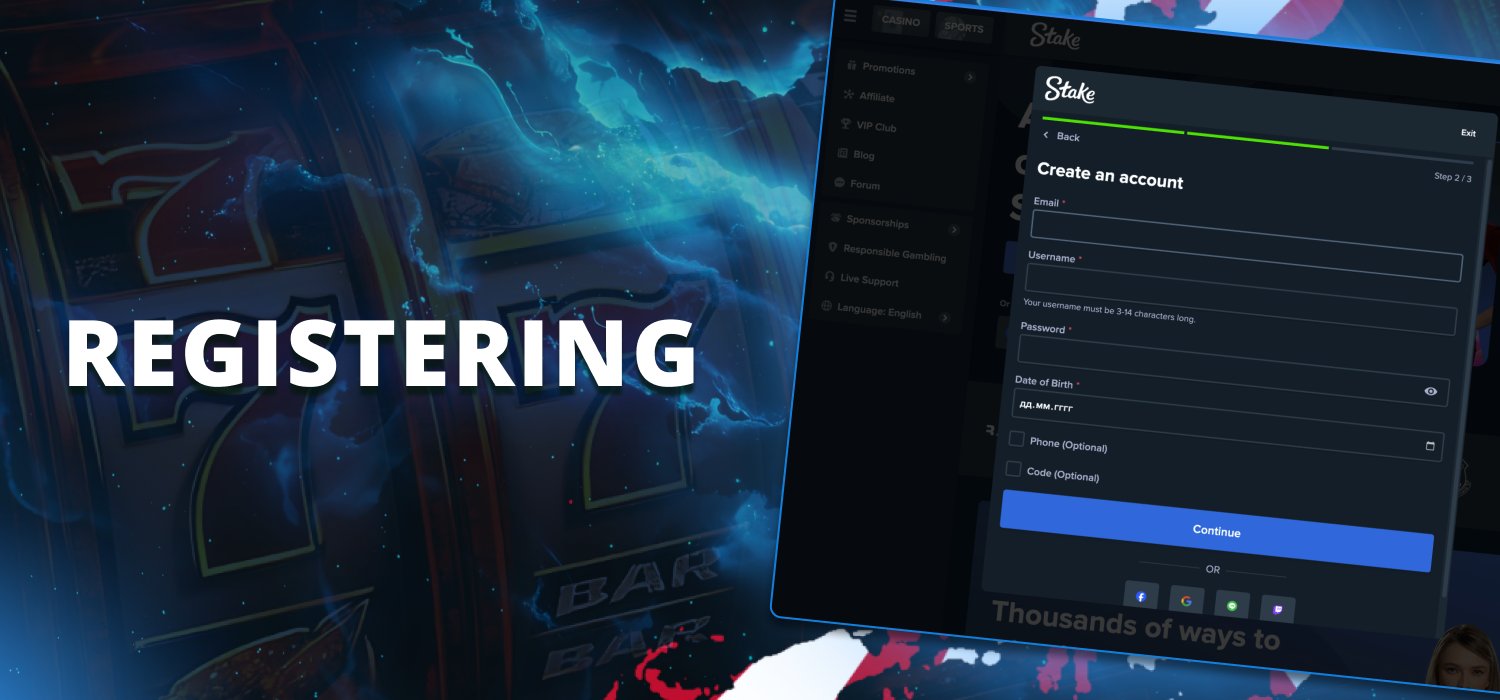
The experience begins when a visitor presses the registration button on the casino’s homepage. The primary form typically requests fundamental personal information that need to precisely match official identification documents. Entries usually feature full legal name, date of birth, residential address, email address, and a mobile phone number. At this stage, the system conducts preliminary automated checks, including verifying that the email format is valid and that the date of birth satisfies the minimum age requirement. No account is fully activated yet; the user can often log in to a restricted lobby but may not make a deposit or play real-money games until further verification steps are completed. This initial phase lays the groundwork for a secure account and guarantees that the information provided later will be consistent with the documents submitted.
Establishing a Strong Password
At registration, users are required to set up a password. A strong password is the primary defense for every online account. Security protocols at Slimking Casino demand a required length and a combination of capital letters, lower-case characters, numbers, and symbols. Users should steer clear of using easily guessable information such as animal names, birthdays, or keyboard sequences. The platform assesses password strength in live, often displaying a visual meter. It is also recommended to utilize a distinct password that has never been used across other sites, because a data breach in another place could jeopardize the casino account. Password tools can aid in creating and keeping complicated credentials in a secure manner, reducing the load on recall while preserving high protection standards.
Configuring Two-Factor Authentication
Immediately after creating a password, numerous modern casino platforms provide an voluntary but extremely suggested security layer: two-factor authentication, or 2FA. When enabled, logging in requires not only the password but also a time-based code produced by an authenticator app on the player’s smartphone or transmitted via SMS. This means that even if a password is stolen, an unauthorized third party cannot access the account without physical possession of the linked device. The setup process is simple; the user captures a QR code with an app like Google Authenticator or receives a text message with a verification code. Once activated, the login flow becomes markedly more resilient against phishing attacks and credential stuffing, offering peace of mind every time the player signs in.
What Happens During the Verification Process
Once documents are uploaded, a sophisticated backend process begins. The initial step is an automated scan using optical character recognition technology to pull text data from the images. This data is compared against the details entered during sign-up. The system also examines the document’s security features, such as holograms, microprinting, and barcode formats, against known templates to identify forgeries. If the automated checks pass with a high confidence score, the account can be approved within minutes. However, if there are discrepancies, the file is marked and placed into a queue for manual review by a trained compliance officer. This human element is essential for evaluating edge cases, such as documents with unusual formats or names that contain special characters, making sure the process remains fair and accurate.
Comparing Automated and Manual Verification
The balance between automated and manual verification is designed for both speed and security. Automated systems thrive at handling high volumes of standard documents quickly, matching data points and highlighting obvious mismatches. A passport from a major country with a clear machine-readable zone can often be verified almost instantly. Manual review kicks in when automation cannot achieve a definitive conclusion. A compliance officer might manually examine a blurred photograph against the submitted ID, verify a utility bill’s authenticity by contacting the issuer, or demand additional documentation. This hybrid approach guarantees that while many players obtain full account access in under ten minutes, more complex cases obtain the human attention needed to fix them without undermining the integrity of the platform.
Common Reasons for Verification Delays or Rejections
Understanding the most frequent pitfalls can help users ready their documents accurately from the start. The single largest cause of delay is a difference between the name on the casino account and the name on the identification document. Even a slight typo or the exclusion of a middle name can lead to a rejection. Expired documents are the next most frequent issue; a driving licence that has exceeded its renewal date is not usable for KYC purposes. Blurry or cropped images, where the edges of the document are trimmed or the text is unreadable, create unnecessary back-and-forth. Moreover, using a document that is not on the approved list, such as a student card or a library card, will result in an immediate request for a proper government-issued ID.
Checklist for a Smooth Verification

Before uploading any files, users can go through a simple checklist to minimise friction. The following items cover the most essential aspects of document preparation:
- Make sure the full name on the casino account matches the ID exactly, covering any middle names.
- Verify the identification document has not expired; check the expiry date closely.
- Use a high-resolution camera in a well-lit space, preventing flash reflection on glossy surfaces.
- Photograph the entire document, confirming all four corners are present in the frame.
- For proof of address, verify the document is marked within the last 90 days and displays the same address provided at registration.
- When verifying a payment card, cover the middle eight digits and the CVV code, leaving only the name, first six, and last four digits visible.
- Send files in an allowed format, normally JPEG, PNG, or PDF, and ensure each file size within the given limit.
Sticking to this checklist converts a likely stressful step into a easy task, significantly minimising the likelihood of manual review or rejection.
Protecting Your Data During the Identity Check
Uploading sensitive personal documents online naturally creates concerns about data privacy and security. Reputable casinos like Slimking Casino employ bank-grade encryption protocols to safeguard every file transfer. When a document is submitted, it moves over a Transport Layer Security connection, indicating the data is encrypted in transit and cannot be intercepted by third parties. Once obtained, the files are held on isolated servers with strict access controls. Only authorized compliance personnel can see the documents, and their access is tracked and audited. The data is never distributed with unrelated third parties or employed for marketing purposes. After the verification is done, regulatory requirements specify how long the data must be retained, after which it is securely deleted from the system in accordance with data protection laws.
Beyond encryption, the casino’s internal policies are guided by international privacy frameworks. Data minimisation principles mean that only the information necessary to fulfil the verification is collected and processed. Players have the right to request a copy of the personal data held on file and to ask for its deletion once the retention period expires, subject to legal obligations. Regular penetration testing and security audits are performed to find and patch vulnerabilities in the document handling infrastructure. These measures jointly guarantee that the identity check process, while thorough, does not become a privacy risk. The goal is to create a secure environment where the player’s identity is verified without ever disclosing their personal documents to unnecessary risk.