Artificial Intelligence (AI) is no longer a futuristic concept limited to tech companies or science labs. Today, AI is quietly becoming part of our everyday lives—helping us save time, reduce stress, and make better decisions. From managing daily tasks to improving productivity and personal well-being, AI tools are now easily accessible and surprisingly simple to use.
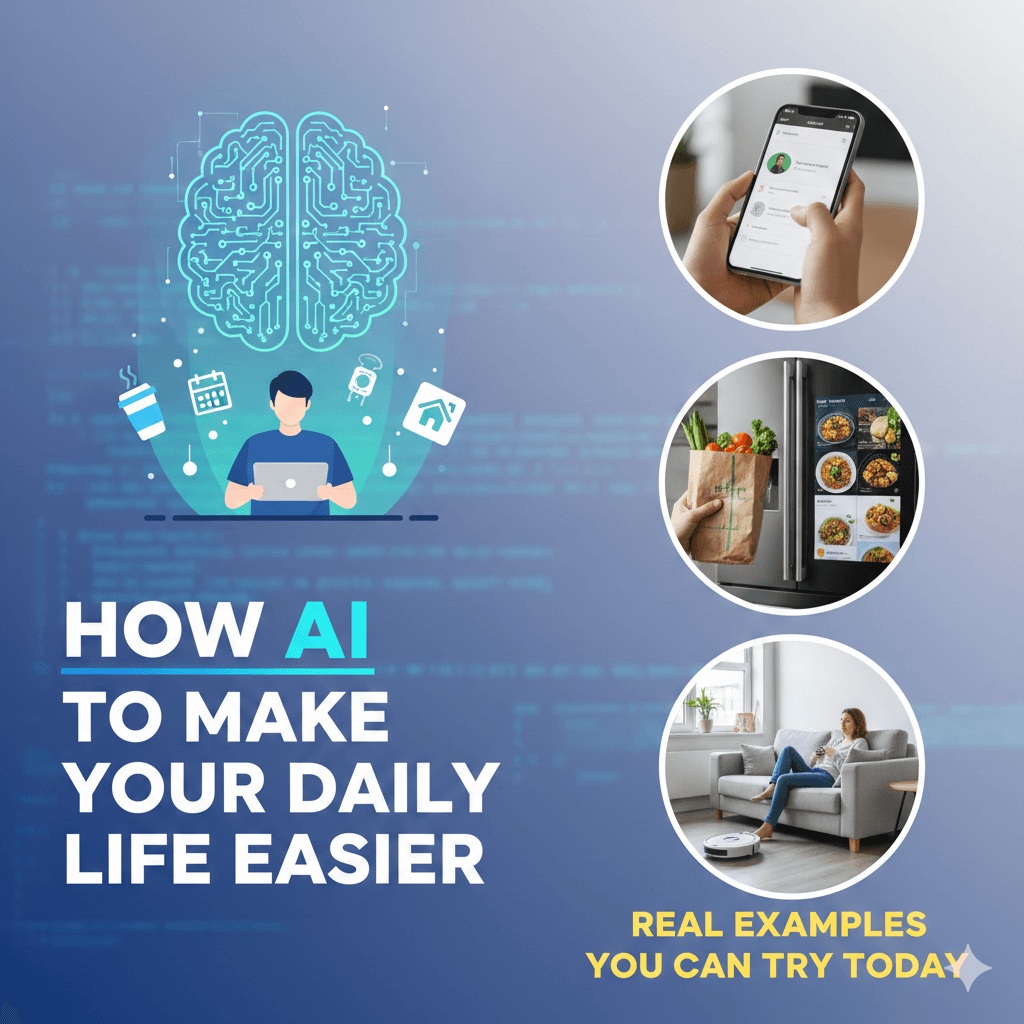
In this article, we’ll explore how AI can make your daily life easier, with real, practical examples you can start using today—no technical background required.
What Is AI in Simple Words?
Artificial Intelligence refers to machines or software that can think, learn, and make decisions similar to humans. AI systems analyze data, recognize patterns, and provide useful outputs such as suggestions, predictions, or automated actions.
You already use AI more than you realize—whether it’s Google Maps suggesting the fastest route or Netflix recommending your next favorite show.
How AI Helps in Everyday Life
1. AI for Daily Planning & Task Management
Managing daily tasks can be overwhelming. AI-powered tools help you plan better and stay organized.
Real examples you can try:
- ChatGPT / Gemini – Create daily to-do lists, study schedules, or work plans
- Notion AI – Organize tasks, notes, and reminders
- Google Assistant / Siri – Set reminders and manage appointments
How it makes life easier:
AI saves mental effort by structuring your day and reminding you of important tasks automatically.
2. AI for Writing & Communication
Whether it’s emails, assignments, captions, or messages, AI can help you write faster and better.
Use cases:
- Writing professional emails
- Improving grammar and tone
- Creating social media captions
- Rewriting content in simpler language
Tools to try today:
- ChatGPT
- Grammarly
- QuillBot
Benefit:
AI reduces writing stress and helps you communicate clearly without spending hours editing.
3. AI for Learning & Studying Smarter
Students and lifelong learners can use AI as a personal tutor.
How AI helps in learning:
- Explains complex topics in simple language
- Summarizes long chapters or notes
- Generates practice questions
- Helps with assignments (ethically)
Popular tools:
- ChatGPT
- Khanmigo (by Khan Academy)
- Perplexity AI
Why it’s useful:
AI adapts to your learning speed and style, making education more personalized and efficient.
4. AI for Health, Fitness & Wellness
AI is playing a big role in improving daily health habits.
Examples:
- Fitness apps that create personalized workout plans
- Diet apps suggesting meal plans
- AI for stress management through meditation and mood tracking
Apps you can try:
- MyFitnessPal
- Headspace
- Calm
- Fitbit (AI-powered insights)
Result:
AI encourages healthier routines and helps you stay consistent without feeling overwhelmed.
5. AI for Smart Shopping & Money Management
AI can help you make smarter financial decisions.
Where AI helps:
- Comparing prices online
- Tracking expenses
- Budget planning
- Fraud detection in banking apps
Tools & examples:
- Google Shopping recommendations
- Amazon product suggestions
- Banking apps with AI insights
- Expense tracking apps like Walnut or Money View
Advantage:
You save money, avoid unnecessary spending, and manage finances more confidently.
6. AI in Travel & Navigation
Planning travel has become much easier with AI.
AI-powered solutions:
- Best route suggestions (Google Maps)
- Flight and hotel recommendations
- Real-time traffic updates
- Language translation
Tools to try:
- Google Maps
- Google Translate
- Skyscanner
- TripIt
Why it matters:
AI reduces travel stress and helps you plan faster and smarter.
7. AI for Home & Lifestyle Convenience
Smart homes are another area where AI shines.
Examples:
- Smart speakers controlling lights and appliances
- AI-powered security cameras
- Voice-controlled devices
Popular AI devices:
- Amazon Alexa
- Google Nest
- Smart plugs and bulbs
Outcome:
Your home becomes more comfortable, efficient, and secure with minimal effort.
8. AI for Content Creation & Creativity
AI is a powerful assistant for creators, marketers, and small business owners.
AI can help with:
- Blog writing
- Image generation
- Video captions
- Marketing ideas
Tools you can try today:
- ChatGPT (content & ideas)
- Canva AI (designs)
- DALL·E / Midjourney (images)
Impact:
AI boosts creativity while saving time and effort.
Is AI Safe to Use in Daily Life?
Yes, AI is generally safe when used responsibly. However:
- Avoid sharing personal or sensitive information
- Cross-check important information
- Use AI as a support tool, not a replacement for human judgment
When used wisely, AI becomes a powerful daily assistant, not a risk.
The Future of AI in Daily Life
AI will continue to become:
- More personalized
- More affordable
- More integrated into daily routines
From education and healthcare to work-life balance, AI will play a major role in simplifying human life.
Conclusion: Start Small, Use AI Smartly
AI doesn’t require technical expertise or expensive tools. Even small steps—like using AI for planning, writing, or learning—can make a noticeable difference in your daily routine.
The key is to start small, experiment, and use AI as a helper, not a shortcut. With the right approach, AI can truly make your daily life easier.
FAQs
1. Do I need technical knowledge to use AI tools?
No. Most AI tools are designed for beginners and work with simple text commands.
2. Are AI tools free to use?
Many AI tools offer free versions with optional paid upgrades.
3. Can AI replace human jobs?
AI supports humans by automating repetitive tasks, but it still needs human creativity and decision-making.
4. Is AI useful for students?
Yes. AI helps with studying, note-making, understanding concepts, and time management.
5. How can I start using AI today?
Start with tools like ChatGPT, Google Assistant, or AI-powered apps you already use daily.