
Self-care is no longer just about bubble baths and candles — it’s about understanding your emotions, building healthier habits, and creating space for your mental well-being. In today’s busy world, even taking five minutes for yourself can feel like a challenge. That’s where AI-powered self-care tools are making a difference.
AI can help you check in with your emotions, guide you through journaling, track your mood patterns, and offer gentle suggestions to improve your mental wellness. It’s like having a quiet, supportive companion who listens, reflects, and helps you grow.
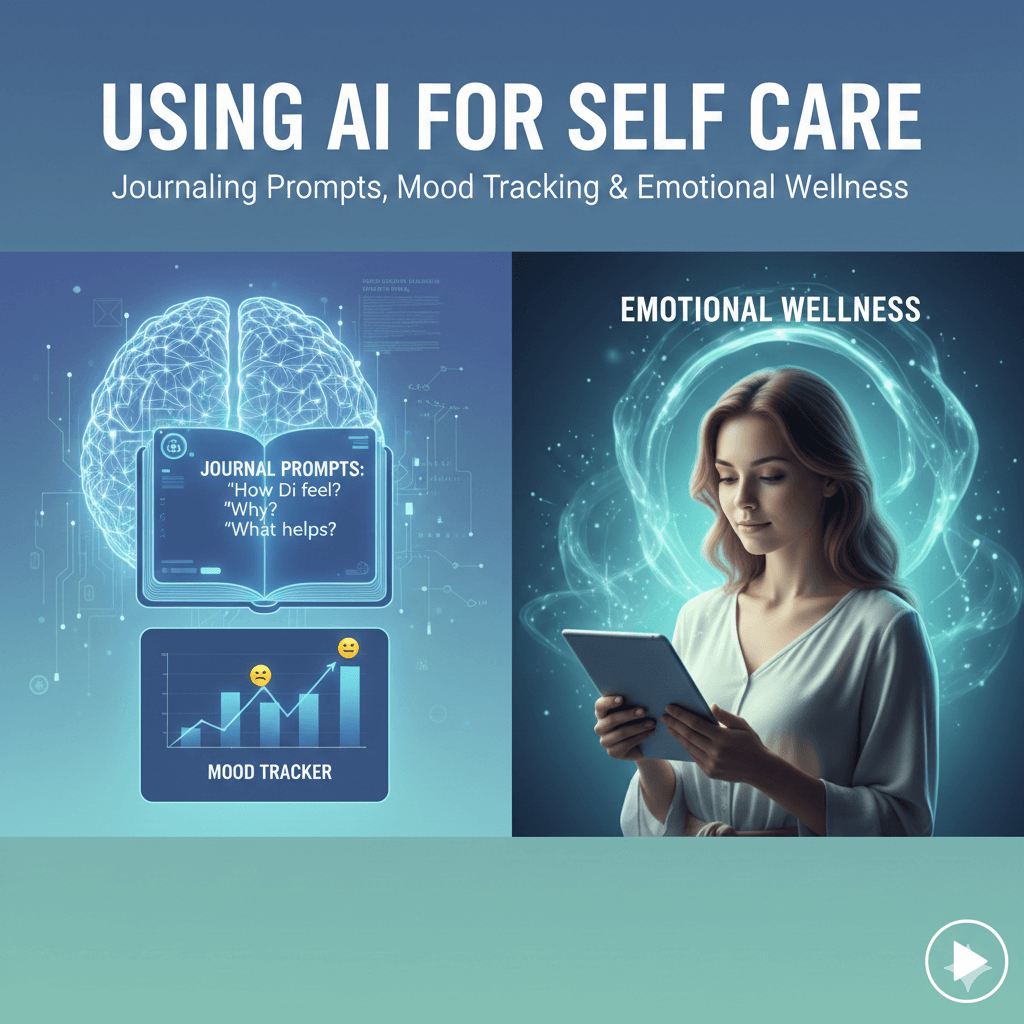
This guide explores how AI can help with emotional wellness, simple tools you can start using, and journaling prompts that bring clarity and healing.
Why AI Is Becoming a Self-Care Partner
AI doesn’t judge, get tired, or run out of patience. It gently encourages you to understand yourself better.
People use AI for self-care because:
- It provides daily emotional check-ins
- It helps you identify mood patterns
- It creates personalized journaling prompts
- It offers tools for mindfulness and stress relief
- It helps you express feelings you struggle to describe
- It provides emotional support anytime, anywhere
For those who find it difficult to journal or reflect alone, AI makes self-care more accessible and consistent.
How AI Supports Emotional Wellness
AI isn’t a replacement for therapy, but it’s a fantastic everyday wellness companion. Here’s how it helps:
1. AI Helps You Understand Your Emotions
Sometimes we feel irritated, drained, or anxious without knowing why.
AI tools can help you label emotions and explore their source with questions like:
- “What happened today that might have triggered this feeling?”
- “Is this emotion familiar?”
- “Would you like to unpack this together?”
This emotional clarity is the first step to healing.
2. AI Encourages Consistent Journaling
Journaling can be extremely therapeutic — but staring at a blank page is intimidating.
AI can help by:
- Giving guided prompts
- Asking reflective questions
- Organizing your thoughts
- Summarizing your feelings
It makes journaling easier and more meaningful.
3. AI Tracks Your Mood Patterns Over Time
AI-powered mood trackers identify emotional trends such as:
- When you’re most stressed
- What triggers your sadness
- What improves your mood
- Weekly or monthly emotional cycles
This insight helps you take proactive steps.
4. AI Helps Create Mindfulness Routines
AI wellness apps can:
- Suggest breathing exercises
- Guide quick meditations
- Offer gratitude reflections
- Encourage small daily habits
Just 3–5 minutes a day can shift your mindset.
5. AI Provides Gentle Motivation & Positivity
AI can write:
- Motivational affirmations
- Encouraging messages
- Personalized reminders
- Accountability check-ins
Perfect for days when you need a little support.
Best AI Tools for Self-Care in 2025
Here are must-try tools that support emotional wellness:
1. Reflectly AI – Personal Diary Companion
Helps you journal with:
- Thoughtful questions
- Daily reflections
- Emotional insights
2. Woebot – AI Mental Health Friend
A conversational AI that:
- Helps you challenge negative thoughts
- Teaches CBT techniques
- Provides emotional support
3. Calm AI – Mindfulness & Relaxation
Useful for:
- Sleep stories
- Guided meditations
- Anxiety reduction
4. Youper AI – Emotional Health Assistant
Works well for:
- Mood tracking
- Emotional insights
- Journaling guidance
5. ChatGPT – Your Everyday Self-Care Partner
You can use ChatGPT for:
- Daily check-ins
- Journaling prompts
- Gratitude lists
- Affirmations
- Deep emotional reflections
You’ll find a full list of powerful prompts below!
AI Journaling Prompts for Self-Care & Reflection
These prompts help you reflect, heal, and grow. Copy/paste them into ChatGPT or your AI journaling app.
Daily Check-In Prompts
1. “Help me reflect on my day. Ask me 5 questions about my emotions, energy levels, and highlights.”
2. “I’m feeling a little overwhelmed. Can you help me understand why?”
3. “Guide me through a gentle end-of-day reflection to help me relax.”
Emotional Awareness Prompts
4. “Help me label the emotions I’m feeling right now and explore their possible causes.”
5. “Ask me questions to help me unpack a feeling I can’t describe.”
6. “Help me understand if my current emotions are temporary or connected to deeper patterns.”
Stress & Anxiety Prompts
7. “Help me calm down by guiding me through a grounding exercise.”
8. “Ask me reflective questions to understand what’s making me anxious today.”
9. “Help me reframe a stressful thought into a more positive perspective.”
Self-Love & Compassion Prompts
10. “Help me write a self-compassion letter to myself.”
11. “Ask me questions that remind me of my strengths and accomplishments.”
12. “Help me challenge negative self-talk I’ve been struggling with.”
Healing & Emotional Release Prompts
13. “Guide me through journaling about something that hurt me but I never expressed.”
14. “Help me reflect on a difficult memory in a gentle, supportive way.”
15. “Ask me reflective questions to understand a recurring emotional pattern.”
Gratitude & Mindfulness Prompts
16. “Help me create a gratitude list of 5 things I overlooked today.”
17. “Guide me through a mindful reflection on something positive that happened this week.”
18. “Help me write a mindful paragraph appreciating myself.”
Goal Setting & Wellness Planning Prompts
19. “Help me set 3 emotional wellness goals for this week.”
20. “Create a simple self-care routine based on my current stress levels.”
21. “Ask me questions to help me discover what I truly need right now.”
AI for Mood Tracking: How It Helps You Grow
AI doesn’t just record your moods — it helps you understand them.
1. Identifies Emotional Patterns
AI can find trends such as:
- Weekend mood drops
- Stress before meetings
- Increased energy after workouts
This awareness provides clarity.
2. Helps Predict Triggers
By analyzing your entries, AI notices:
- What causes anxiety
- What boosts happiness
- What drains your energy
You can then make informed lifestyle changes.
3. Encourages Emotional Strength
- Tracking your mood builds emotional awareness.
- Awareness leads to healing.
- Healing leads to growth.
4. Creates Personalized Wellness Plans
Based on your patterns, AI can suggest:
- Morning routines
- Night rituals
- Break reminders
- Mood boosters
- Coping strategies
How to Use AI Safely for Emotional Wellness
AI is helpful, but your emotional safety is important.
✔ Don’t treat AI as a replacement for therapy
It’s an assistant, not a professional.
✔ Avoid sharing deeply sensitive private details
Keep your personal and financial information safe.
✔ Use AI to support—not control—your wellness journey
Your intuition still matters.
Conclusion
AI for self-care is like having a gentle companion who listens, reflects, and supports you without judgment. It helps you understand your emotions, manage stress, build better habits, and nurture your inner peace.
Whether you’re journaling, tracking your moods, or exploring mindfulness, AI can make emotional wellness easier and more meaningful.
Self-care is not selfish — it’s necessary.
And with AI, it becomes beautifully simple and wonderfully accessible.
FAQs
1. Is AI safe for emotional wellness?
Yes, as long as you avoid sharing deeply personal details and remember it’s not a therapist.
2. Can AI help with anxiety?
AI can guide breathing exercises, offer grounding prompts, and help with thought reframing.
3. What’s the best AI tool for journaling?
ChatGPT, Reflectly, and Youper are excellent choices.
4. Can AI fully replace journaling?
No — it enhances journaling by guiding your thoughts but your reflections are the heart of the process.
5. How often should I use AI for self-care?
Daily check-ins or 3–4 times a week work best for emotional growth.