
We live in a world where screens are everywhere. Work happens online, social connections live on apps, entertainment is just one tap away, and notifications never seem to stop. While technology makes life easier, it can also blur the line between our online life and offline life.
Many people feel:
- Always connected, but mentally tired
- Productive online, but disconnected offline
- Busy, yet not truly present
This is where AI can actually help — not harm.
Used mindfully, AI can support a healthier balance between screen time and real life. It doesn’t push you to be online more. Instead, it helps you organize, simplify, and create space for what truly matters.
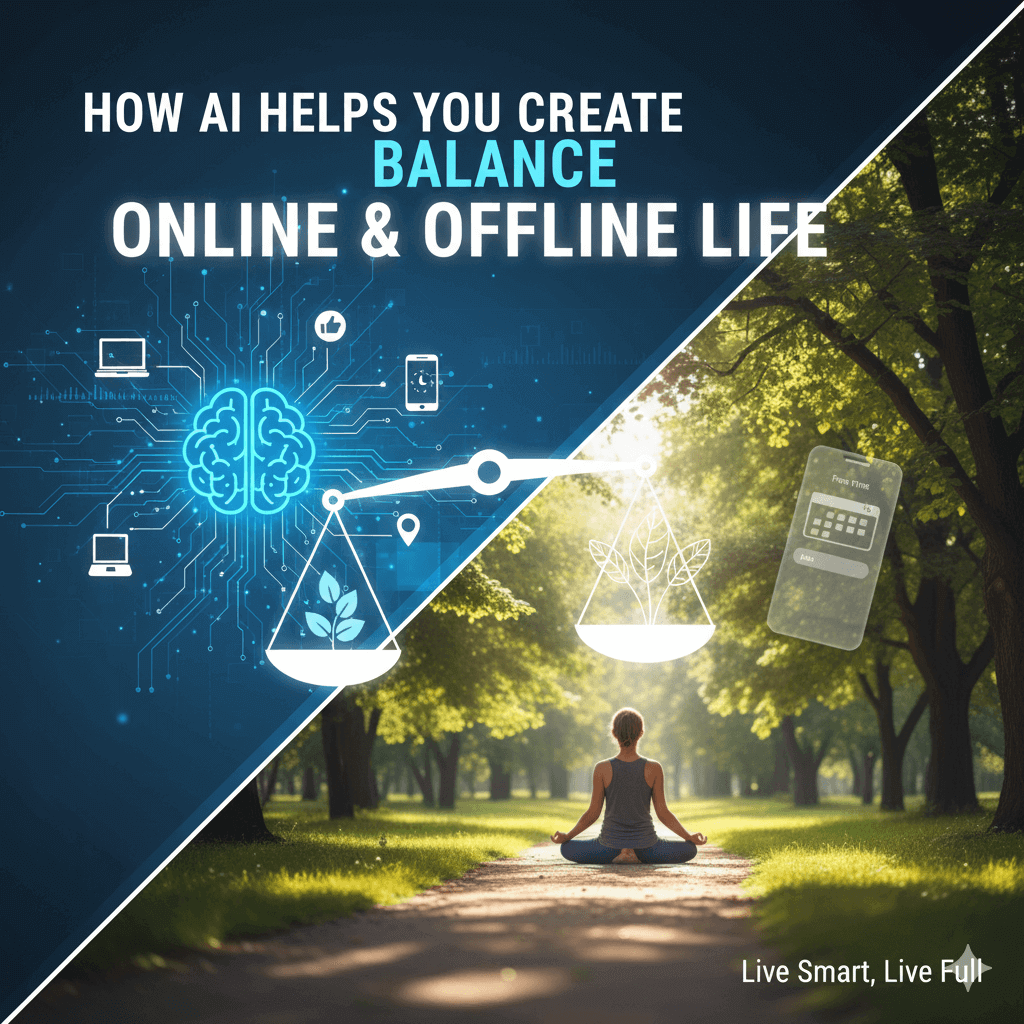
In this article, we’ll explore how AI can help you build a balanced online and offline lifestyle in a practical, realistic way.
What Does a Balanced Online & Offline Life Mean?
A balanced life doesn’t mean avoiding technology.
It means using it intentionally.
A healthy balance looks like:
- Focused time online (work, learning, planning)
- Guilt-free time offline (rest, family, hobbies)
- Less scrolling, more living
- Technology supporting life—not controlling it
AI can help you reach this balance by reducing digital overload and improving clarity.
Why Digital Overload Happens
Digital overload often comes from:
- Too many apps and notifications
- Constant multitasking
- Blurred work-life boundaries
- No clear routines
- Fear of missing out
AI helps reduce this overload by structuring your digital use, so your offline life gets the attention it deserves.
1. AI Helps You Plan Your Day More Intentionally
Unplanned days often lead to excessive screen time.
How AI Helps
AI can:
- Create realistic daily plans
- Balance work, rest, and personal time
- Reduce decision fatigue
Simple prompt example:
“Help me plan a balanced day with focused online work and offline personal time.”
When your day has structure, you’re less likely to scroll mindlessly.
2. AI Helps Set Healthy Screen-Time Boundaries
AI can help you become more aware of how much time you spend online.
How AI Supports Boundaries
- Suggests time blocks for online work
- Encourages breaks
- Helps schedule offline activities
Prompt example:
“Help me set healthy boundaries for screen time during the day.”
Boundaries don’t restrict you—they protect your energy.
3. AI Helps You Be More Productive Online (So You Log Off Sooner)
When online work feels endless, it often means poor focus—not too much work.
How AI Improves Online Productivity
AI helps by:
- Prioritizing tasks
- Reducing multitasking
- Creating focused work sessions
Prompt example:
“Help me finish my online tasks faster so I can log off on time.”
Better productivity = more offline freedom.
4. AI Helps Reduce Mental Clutter from Digital Life
Constant information overload creates stress.
How AI Helps
AI can:
- Organize thoughts
- Summarize information
- Help process decisions
Prompt example:
“Help me organize my thoughts and reduce digital overwhelm.”
A calmer mind makes it easier to disconnect.
5. AI Encourages Meaningful Offline Time
AI doesn’t just plan online tasks—it can help plan offline life too.
How AI Supports Offline Living
AI can help you:
- Plan hobbies
- Schedule self-care
- Make time for family
- Create offline rituals
Prompt example:
“Suggest simple offline activities to balance my screen time.”
Offline moments become intentional, not accidental.
6. AI Helps Create Digital-Free Routines
Routines create balance naturally.
Examples of AI-Supported Routines
- Morning routines without screens
- Work-focused digital blocks
- Evening wind-down without devices
Prompt example:
“Create a daily routine that includes screen-free time.”
Routines reduce the urge to constantly check devices.
7. AI Helps You Be More Present Offline
One of the biggest challenges today is mental presence.
How AI Helps
AI can:
- Encourage mindfulness
- Suggest grounding exercises
- Reduce overthinking
Prompt example:
“Help me slow down and be more present in my offline life.”
When your mind feels settled, screens lose their grip.
8. AI Helps You Reflect on Your Digital Habits
Awareness is the first step toward balance.
How AI Supports Reflection
AI can help you:
- Reflect on daily screen usage
- Notice patterns
- Identify digital triggers
Prompt example:
“Help me reflect on my digital habits and improve balance.”
Reflection leads to conscious change.
How to Use AI Without Increasing Screen Dependency
AI should reduce screen time—not increase it.
✔ Use AI intentionally, not constantly
✔ Plan, then log off
✔ Avoid using AI endlessly for small decisions
✔ Combine AI planning with offline action
✔ Use AI as a tool, not entertainment
The goal is less scrolling, more living.
Simple AI Prompts for Better Balance
You can save these prompts:
- “Help me create a balanced daily routine.”
- “Help me reduce screen time gently.”
- “Suggest offline activities for relaxation.”
- “Help me focus online so I can disconnect earlier.”
- “Help me create healthy digital boundaries.”
Small prompts can lead to big lifestyle shifts.
Common Mistakes to Avoid
❌ Trying to eliminate technology completely
❌ Using AI excessively
❌ Ignoring offline needs
❌ Expecting instant balance
❌ Being too strict with yourself
Balance is flexible—not perfect.
Conclusion
Technology is not the enemy—unbalanced use is. When used mindfully, AI can actually help you reclaim your time, attention, and presence.
AI supports balance by:
- Organizing online life
- Improving productivity
- Reducing digital stress
- Encouraging meaningful offline time
The result is a lifestyle where:
- You use technology with intention
- You enjoy offline moments without guilt
- Your life feels calmer and more aligned
Balance doesn’t mean less technology—it means better use of it.
FAQs
1. Can AI really help reduce screen addiction?
Yes, when used intentionally for planning and boundaries.
2. Will using AI increase my screen time?
Not if you use it as a planning tool, then log off.
3. Is digital balance realistic in modern life?
Yes—balance is about awareness, not perfection.
4. Can AI help with work-life balance?
Absolutely. AI helps structure work so personal time is protected.
5. How often should I review my digital habits?
Weekly reflection works well for most people.